Thursday, January 13, 2011

Industrial Sewing Machine Order

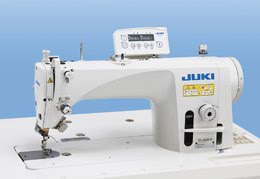
It is official the check is in the mail today, I am placing the order for the Juki9000B. We have had a few days to think this over and I am totally fine with my decision.

My big hold out was the "oil" I have opted for the "semi-dry" which is the middle option, to the full oil or the dry head. I have been reassured many times by the dealer that this will not be a problem to manage, and my husband also discussed with the dealer and felt this was the best option.

Additionally the dealer found out from the Juki America warehouse that the semi-dry to dry is sold 100:1, with this info I think this is the best option.

I should have my machine in 3-4 weeks, I will spend time at the dealer to get some hands on help learning the machine, I will also have available phone support and email support. I feel confident in this location regarding service after the sale.

I am both nervous and excited about this step forward for my business in 2011. I will be sure to report back how it is going.

Joann Fabrics VIP Card

Just before the holidays I learned about the Joann Fabrics VIP card, I heard it in their stores via overhead commercial, then it was in their sales flier.

This is a program where you get an additional 10% off every purchase when you shop in their stores. The sign up was on the website, and was quite easy you need to be a reseller or a non profit organization to qualify. The sign up can be found here, once you sign up they say it takes 3-4 weeks to get your card, I got mine in less then 2 and this was at the holidays.

Once you receive your card you will need to take it and have it validated, to have it validated you will need your tax ID, take a copy as they did ask to keep it. You 'should' only have to validated at one store, but then should be able to shop other locations.

The VIP card is valid for one year, though mine expires 8/31/11, which is not quite a year, I have read you can re-verify/apply over the phone. I would also guess you will need to have it verified again at store level.

I have found this does not make your purchases tax exempt, you will need to fill out additional forms for this qualification. You do need to do this at each location, and they still verify it each time except the one store where they kind of know me. For the tax exempt status you will need to provide a copy of your tax certificate, I always keep a spare copy on me for this reason.

Overall this is a very worthwhile step to take, it is relatively easy and saving 10% on everything sale and non sale items adds up over the year. I will also add, I know retail settings can be different, being overly prepared is good, this was my experience here in the Metro Detroit area.

Tuesday, January 11, 2011

Prototype Fabrics


I often am working on new ideas and designs. I usually start with paper and calculator, and eventually these ideas move to fabric.

Used to be I would use cheap fabrics and halfway do something, but I found that often did not yield accurate results. I have since changed up this to using "real" fabrics and making actual product. Luckily I have a 5 year old daughter who gets many of these early experiments, so I usually go for girl friendly prints.

I also now use actual materials that I offer for sale, meaning high quality cottons along with any other components that would be used in the final product. I found using the same quality yields more accurate results that I can then apply to my finished line. Using cheaper quality fabrics does not yield the same results and ends up wasting more time and money in the long run. When I used cheaper fabrics when I got to my product fabrics different results meant I had cut into fabrics I hope to sell, sometimes ruining the final product.

Crayon Roll Prototype, 16 crayons, button closure


Crayon Roll, 8 crayons, ribbon tie closure


Note Book/Steno Pad book, working on this for a while

Luckily a quilt shop near me I am able to snag the occasional low cost fabric for my experimentation, I have gotten fabrics as low as 1.00 a yard, this is for hi quality quilt shop cottons.

Practicing with these fabrics is great, I get an item my daughter can use and enjoy and I can make design modifications before I begin using fabrics I hope to offer for sale.

Monday, January 10, 2011

Industrial Sewing Maching Dealer Visit

Today we went to check out the Juki supplier in person. The place we went was not a traditional sewing store, in fact it was not a sewing store at all. It was an office with a warehouse. The warehouse was where the Juki, components and tables are received and assembled and retro fitted as necessary. They also service all machines they sell there and we were able to see the repair shop as well.

Since I am in the Detroit area the main customers of this dealer are automotive, and marine related. For automotive the machines are used for many purposes from interiors, seats and air bags. For marine application, sails, boat covers, seats, etc. They also do work for the military, and for bullet proof vests. They do sell to the apparel and home decor industry though automotive is their main niche. They sell a fair number of machine to smaller users (like me), who purchase 1-10 machines. My husband went with me and was a huge help, since he is in basically the same industry, ie selling machines to automotive and various industrial application, he was very suited to the conversations.

We spent about 2 hours with our salesperson, (actually he does a lot more then that) we felt we had his undivided attention. We met in a conference room and discussed the basics of the machine along with the features. I took a fair number of samples of my work in various stages of construction for him to view and help analyze which machine would best do the job.

I am closing in on the DDL9000B, as blogged about here though he thought for some of what I brought him a "needle feed" machine would be better. A needle feed machine means the needle will feed the top fabric in tandem with the bottom fabric, or with the feed dogs. This helps eliminated or reduce uneven feed of layers. My impression of this is it sort of acts as a walking foot on a home machine - though don't use that term when discussing industrial machines as "walking foot machines" are VERY different machine then a straight stitch machine.

In the end, he said the 9000B will handle it but I will need to manage the layers, I explained I do this now with a much "less" of a machine. The application where he felt this would be a problem, is really one component of my construction. I feel that most of my needs are more then satisfied with this machine and working around that one technique with a better machine then I have now will not be a problem. I will add the "needle machine" is over 1500.00 more then the machine I am leaning towards getting.

Then we got to go out to the warehouse/work spaces. This was a pretty impressive and much larger warehouse then I would have imagined. This is where they receive machines, assemble and retro fit machines before run off for customers and final delivery. My machine and table will come in about 20 pieces with parts coming from various suppliers.

I snapped a quick pic looking into the warehouse

We spent about 45 minutes in the warehouse touring the machines, most were HUGE machines, many were prototypes or prototype in design and process. They also had machines being retro fitted for airbag applications, these were beasts, very impressive and works of art type machines.

We were able to look at older models that would be similar to what I will be receiving, both with clutch motors - very loud when idle, and servo motors - very quiet you don't know they are on when idle. My machine has a built in servo motor, that is the next generation and a step up from the prior servo motors which are installed below the table, mine will be in the machine.

My husband all interested in what is down below, this model had a circuit breaker below, because it had fabric trimmer, vacuum, needle cooling, and a few others that needed their own power source - um, my machine won't have any of this, but DH was curious

I will admit I blanked out during the guy talk about motors, belts, breakers, horsepower, which was GREAT to have DH along. The topic that DOES get my attention is the oil, my model will have the option to have a "dry head" which means no oiling needed, or the "minute" oil which is the standard. My thoughts are I want no oil, managing oil, possible oil stains and an oil pan all these make me want to run a mile. The salesman and my husband sort of agreed the oil will be a non issue, I am less convinced. When he lifted the machine and there was a pan, about 3 inches wide by 8 inches long with drippy oil, I cringed. He did comfort me and said this is older and very different then my machine would be, still makes me nervous. I would have non staining oil, and only have to oil 2-3 times a year at most. I would occasionally have to clean the oil pan and keep it free from threads and debris, sound unappealing, I think so too. He said the "dry head" is a 75.00 - 100.00 upgrade - sounds good to me.

This is the sewing machine head lifted up - the gray flat spot is the oil pan

We walked around and to the repair area, where all repairs are done, I will be able to have it serviced here, warranty work as well. The machine is only warranted for 90 days, he said any warranty issues are usually found at sew-off prior to pick up. We were a tad less then pleased with this but as he said, pretty much all machine damage breakdown is user created, actual part failures are virtually non existent with the Juki machines.

He talked a fair amount about Juki as a company and how they are copied pretty much all the time, down to labels, stickers numbering schematics. He pointed out a a few identifying marks to ensure Juki machines, they have employed to cut down on look a-likes. My machine will be made in China with Japanese parts and Japanese quality inspectors and controls.

I will get several new options for me which included the ability to program stitches, tensions, needle up, presser foot up/down, auto lock-stitching/back-stitching, thread trimmer.

I will be able to use all my existing threads, I took for his review, as well as mono-filament thread, both were a relief as I can take my current stock and use it going forward.

I will need industrial needles, and will be getting 200 to start, they are priced at 100 for 18.00, so .18 cents per needle, a little less then I am using now, but I will not be able to go off to Joannes for needles.

We discussed safety features, I will have a finger guard, he said most people remove them, I will keep it for a while, maybe a long while.

The machine does not have a built in light, it will have a flex arm light behind that I can point where needed, I don't think this will impact sewing. He said, possibly next year they will add a LCD light to this model, I will NOT be able to have that added later.

Bobbin winding will be more work then I am used to, I will have to lift the machine head, which is on hinges and change bobbins, he said you can access it from under the table, but most do it by lifting head. Oddly, bobbins are the same size, seems funny to me all the advances in sewing and they all have the same size bobbins. A neat feature, not sure how often I use it, you can have 2 threads on the holder, one going through the needle, an the other winding a bobbin along the way. So when you run out of bobbin thread, an new one is wound and ready to go. I will still be able to wind a bobbin the traditional way as well. I think for common colors, like black, brown, etc. I may use this but I will still be winding bobbins when I use a unique color.

The presser foot will also control back-stitching, presser foot up/down, needle up/down and thread cutting from the foot pedal. Traditionally they mount the pedal middle of the needle, mine will be retrofitted to the right. I asked if that was a problem, he said "no, might make the guys in the shop grumble as they will have to bend some wire" I said "I will bring them brownies".

All in all it was an excellent visit, we are going to take a few days to think it over and "probably" place an order by the end of the week. The machine will take about 3 weeks to be ready, right now it is in stock in Florida, and of course needs to be assembled and mounted to the table.

Sunday, January 9, 2011

Sunday Treasury Features


Thursday, January 6, 2011

Sewing Tip: Thread Saver

If you are like me working on a sewing machine without a lot of bells and whistles, this may be something that you deal with that makes you want to pull out your hair.

When finishing a piece and removing it from the machine, then sewing the next piece and thread pulls itself out of the needle. You then have to stop and rethread your machine, ARG - I hate when this happens.

If you have a new machine this feature may already be built in, the needle lift will stay in the up position, so when you move to the next piece the needle goes down and the thread stays put and begins to sew. However older machines, or machines without this feature the needle threader will end up where luck would have it, for me this is always down. I don't have the skill to stop the machine with the threader always at the top so I devised this cheat to keep the thread IN the needle.

I call it a thread saver, really I could call it a hair saver as it stops me wanting to pull my hair out. When working on a single item, that goes in and out of the machine I keep a small piece of scrap fabric nearby to sew onto when a task is complete. I leave the thread saver on the machine as I prep the next step, when I am ready to sew again, the needle will stay threaded. You have to cut as each task is complete, sometimes I will use 2 in tandem to complete a project.

First picture, complete task end with thread saver, then keep the scrap fabric thread saver on the machine as project exits, trim and move to next step

South Eastern Artists of Michigan Team

I am super excited to have received and invite to join a newly formed etsy team, SEAM - South Eastern Artists of Michigan. I am always on the lookout for networking opportunities and this comes along just as I am really trying to expand my offline networks and prescence.

If you are in the Detroit Metro area, hop on over to the team page and take a look. So far looks like a friendly and talented bunch, I am sure I will be blogging about some of my new etsy friends in 2011.

Tuesday, January 4, 2011

Industrial Sewing Machine


So new year and a new plan of action. I am going to be purchasing a new sewing machine, and not just a regular home sewing machine, I am going INDUSTRIAL. I am literally so excited I cannot hold a thought in my head. The above picture is the Juki 9000B, below is how this machine is now at the top of my list.

I had pretty much decided when this day came I would get a Juki, I have read lots of information on these in the last 2 years and it seams they are top of the line for what I need. I have spent the last few days combing the internet researching models, features, and pricing.

Along with this purchase I will be switching office space with my husband, I will have a bigger sewing room that will accomodate my new sewing machine, large table for cutting and working, a desk with my computer and an ironing station (also considering an industrial press). This will be a huge task for both me and my husband to switch rooms, but we are both excited about the change and opportunity for us to both be more productive in 2011. My DH will be in a smaller space but it will be all his own, no more me running in and out to use my computer, print and often having my daughter in tow. A smaller space all his own is very appealing to him, he is a great sport, I know if he were barging into my space as often I barge in I would be annoyed.

So onto my decision process for buying a machine, as I know in my searching I would have liked to see even more home business info on this topic.

First, I had to define what I needed, that was easy a better machine. I currently sew on a Viking it is 8-10 years old and is a perfectly fine sewing machine, it has served me well. But I have outgrown this machine and need to be able to produce more, a lot more.

  • SPEED: The first area I need major improvment is SPEED. Full throttle on the Viking I feel like it is standing still. Going from memory my machine would sew about 400 stitches a minute, I am certain it has slowed since getting it, I think it is around 300 stitches per minute.
  • STITCH CONSISTANCY/QUALITY: My machine does ok, but I have learned how to coax it to get the best stitches possible. Using a walking foot, slower speeds and constant management of tension my stitching is just fine. To free my mind of this task and have better stitching at higher speeds is a must to be more productive.
  • FEATURES: I more or less want everything I currently do to be available in the new machine, or close comparison. I made a list of features I know I needed to be able to accomplish with the new machine. Overall these are very basic and include: Quarter inch seem capability, multiple layers, zippers, back stitching, I would also like to be able to use the same threads I currently use including monofiliament. I would like a free arm but this is just not available in industrial models I will adapt this task or keep a back up on hand.
  • Since I am getting new and industrial there are other options I have seen that look very appealing, finding these in a machine would be a huge plus to my current sewing: Lockstitch, auto backstitching, presser foot raising via foot pedal or knee pedal, auto thread cutter.
  • Local sourcing, I really wanted to find a local dealer, and if I could not get local then somewhere I could drive in less then a day. I had figured I might end up in Chicago which is about 5 hours away. Luckily I have found a much more local dealer in the Metro Detroit area. This is great for service, help and replacement parts and components.
  • Things I learned in my research and will continue to learn about before purchasing. Motors, oil, tension, saftey, sound, tables and accessories, usually a industrial machine is one where the motor is seperate, this makes the motor an easy and inexpensive item to replace. Servo motors are much quieter then clutch motors and are usually an upgrade, and around $100.00. Industrial machines come mounted in there own tables, table size is 20 x 48 inches, motor is mounted under table, foot is affixed to the table.
  • Budget, I know this is usually one of the first considerations in making a purchase like this. I am fortunate as I have been planning for this for a while and really am able to get what I need, in my first looks at a new machine I figured it would start in the 700-1000.00 range, I new my wish list and needs would point me ultimately where I need to go, my hopes are that I can keep the sewing machine up to and hopefully under 2,000.00. As this will be my main machine for my business I want new, so that is going to be the path I take.

I have already been in contact with the local dealer, gotten quotes on 3 machines, and Juki literature for the machines, one for sure is out of my price range (Juki 9010) so I am focussing on the Juki 8700 and 9000B models. The 9000B is the newer model of the two and really I think this will will be my new best friend. My husband and I are planning a trip to visit the showroom and get more information on these models within the next two weeks. I hope to place an order within the next 30 days, it will take 3 weeks to arrive and I will get hands on help from my local dealer as well as full assembly of the table, motor and machine.

I will keep you posted, feel free to follow me and see how it goes, any questions post a comment and I will do my best to answer. I know for me in my research it would be nice to find more home sewers/turned business opinions and info.

Monday, January 3, 2011

Happy New Year

I am just now getting back into the sewing room and spending some time at the computer to get ready for 2011.

Hope everyone is doing well and 2011 is off to a good start. For me the usual desire to be more organized, more efficient, eat better is all in my thoughts. At the forefront of these thoughts is coming up with a business plan for 2011, this included production and equipment. I am super excited for this opportunity and hope to blog about it often.

I also really need to get organized in many locations in my household and hope to use the winter months to work on this as well. And, we really need to do some minor household repairs like to walls, and paint so I will be putting my DH to work as well...bet he can't wait.

I will also be moving into a new sewing space and outfitting that as well, and the best part is I will be upgrading to an industrial machine, and hope to blog about that as well as I know for me researching this has been a huge time sink, which will hopefully pay off by mid year at the latest.

Have a safe and happy 2011, hope to see you soon!

Sunday, December 19, 2010

Snowman Pillow

I managed to sneak in a little sewing time for myself this holiday season and made this snowman pillow. I adapted a Fons and Porter pattern for my pillow. A super ease holiday accessory that I can keep out all winter long.

Supplies
  • Fabric 1/2 yard
  • Chenille - 10 inch square
  • Ball fringe - 2 yards
  • Buttons for eyes and mouth
  • Scrap orange for nose

Cut fabric border at 4.5 inches, I used a mitered corner but this can be done without miters.

Sew buttons for eyes and mouth in expression of your choice, I used 6 buttons for the mouth and free hand drew a nose from orange plaid, then raw edge appliqued.

I find it easier to attach the ball frince on first, then sew a back to the pillow front. For the back I just layered the same fabric as border, put a double inch hem then sewed front to the back and inserted a pillow.

Instant Snowman that did not require me to find my gloves, or go outside.

Related Posts with Thumbnails